Making the switch from an established test automation platform to a new one is always a decision that generates internal debate. The sunk cost argument ('we have invested so much in Tricentis, we cannot just walk away') competes with the opportunity cost argument ('every quarter we stay on Tricentis is another quarter of Oracle maintenance overhead we cannot recover'). For Oracle teams that have made the switch from Tricentis Tosca to SyntraFlow, the 90-day experience tells a consistent story.
Days 1-14: Setup and Oracle Connection
The first two weeks of a SyntraFlow implementation are fundamentally different from a Tricentis implementation. There is no on-premises installation, no server configuration, no network security review for a locally-deployed test tool. SyntraFlow is a SaaS platform — the Oracle connection is configured through a lightweight browser connector, and the first Oracle test executions typically happen within the first week.
For teams coming from Tricentis, the most common reaction at this stage is scepticism. 'Is it really this easy?' is the most frequent question. The Tricentis implementation took months and required dedicated professional services. A working SyntraFlow Oracle connection in under a week is genuinely surprising.
The Oracle connection setup involves: configuring SyntraFlow's Oracle Fusion connector with your environment URLs; validating authentication against your Oracle non-production environment; and running SyntraFlow's initial environment scan, which identifies your Oracle modules, configured business processes, and any custom configurations relevant to test design.
Days 15-30: Pre-Built Test Library Review and Customisation
The second two weeks are where teams moving from Tricentis experience the most significant mindset shift. In Tricentis, every test case was built by the team — there was nothing to import, nothing to start from. In SyntraFlow, the pre-built Oracle test library provides an immediate starting point.
The pre-built library covers Oracle Fusion's standard business processes across Finance, HCM, SCM, and Projects. Teams review the pre-built test cases against their Oracle configuration, identifying which apply as-is, which need configuration-specific adjustment, and which need custom additions. For most Oracle Fusion deployments, 60-70% of pre-built test cases apply directly or with minor adjustment. The remaining 30-40% require team-specific customisation.
This is the week where the comparison with Tricentis becomes most stark. A comparable coverage level in Tricentis took 3-6 months of dedicated test authoring. In SyntraFlow, a comparable coverage level is reached in 2-4 weeks.
For GCC and UK Oracle teams, this is also the week where SyntraFlow's compliance test packs are configured. The SOX, GDPR, HIPAA, CCPA, ZATCA, WPS, HMRC MTD, and SOX compliance test suites are reviewed, adjusted for the team's specific compliance obligations, and scheduled for their first run.
Days 31-60: First [Full Regression Cycle](/features)
The first full SyntraFlow regression cycle is typically the moment that converts sceptics into advocates. Watching 400-600 Oracle test cases execute automatically in 3-4 hours — producing a comprehensive results dashboard with pass/fail status, evidence screenshots, and defect-ready failure descriptions — is a qualitatively different experience from watching a QA team manually execute the same tests over 3-4 weeks.
The results at this stage also routinely surface Oracle issues that the previous Tricentis-based testing approach had missed. The higher coverage breadth of SyntraFlow's pre-built library, running against the team's actual Oracle configuration for the first time, finds edge cases and configuration issues that previous testing had never examined. Most teams find 5-15 previously unknown Oracle issues in their first SyntraFlow full regression cycle.
Days 61-90: Oracle Quarterly Update Cycle
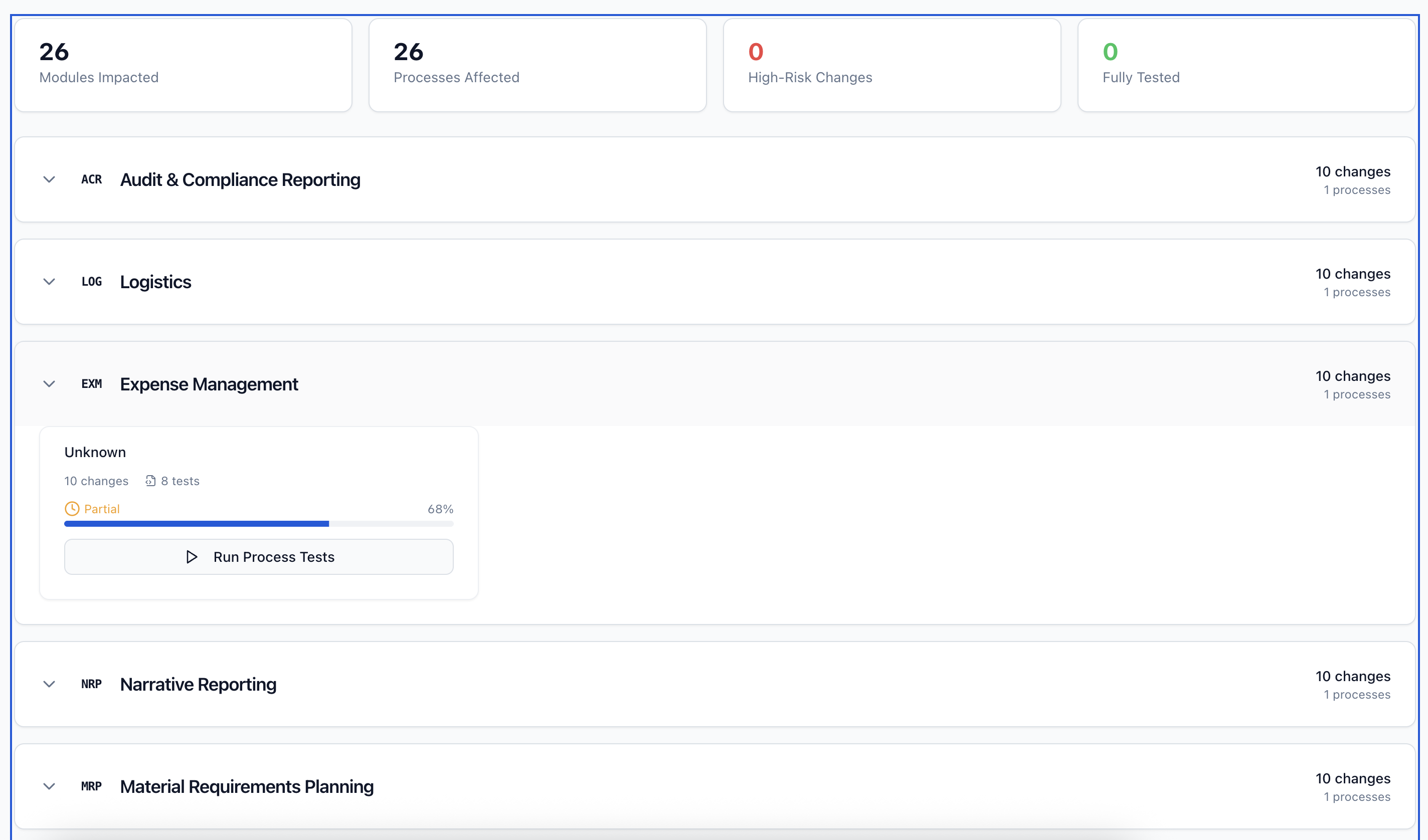
The defining validation of the switch typically comes when the first Oracle quarterly update arrives during the SyntraFlow onboarding period. Teams experience for the first time what Oracle update testing looks like with Release Intelligence: impact analysis completed in hours rather than days; affected test cases flagged for review rather than manually hunted through release notes; and the regression suite running against the updated Oracle environment with no test scripts broken by UI changes.
For teams that experienced Tricentis-based Oracle quarterly update testing — the weeks of broken scripts, manual release note review, and emergency remediation — this experience is transformative. The quarterly update that previously consumed 3-4 weeks of QA team time is completed in 3-5 days.
By day 90, teams that made the switch from Tricentis to SyntraFlow are typically running more Oracle test coverage, more frequently, with less QA team effort, and with better compliance validation than they achieved with Tricentis.
Contact SyntraFlow to discuss a migration assessment from your current Oracle testing platform. We will model your specific Oracle environment, estimate your migration timeline, and project your first-year productivity improvement.